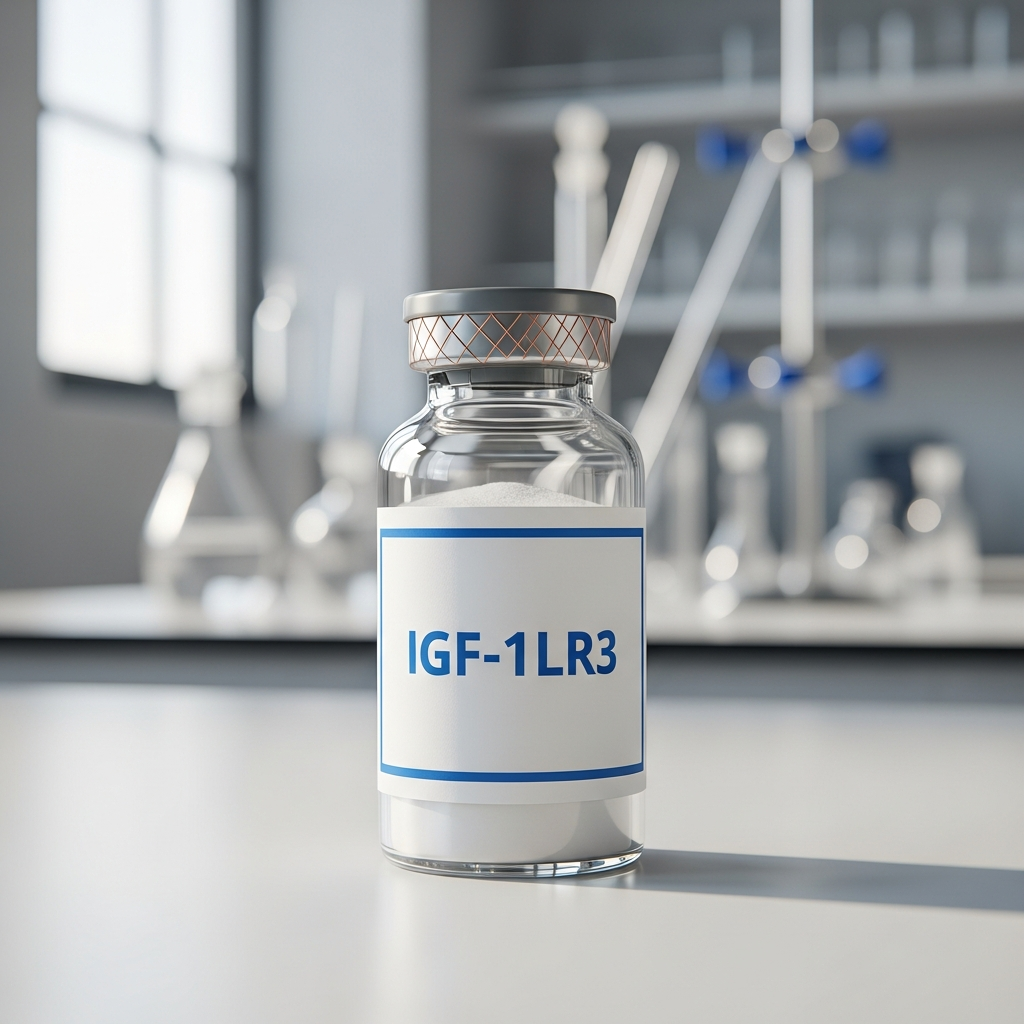
IGF-1 LR3: Unlocking Muscle Hyperplasia and Cellular Splitting
Introduction: Beyond Muscle Growth — Understanding Muscle Creation
In the world of muscle research, there’s a crucial distinction that separates casual understanding from scientific mastery: the difference between hypertrophy (bigger muscle cells) and hyperplasia (more muscle cells). While most anabolic compounds focus on hypertrophy, one peptide stands apart for its unique ability to promote true muscle cell hyperplasia — the creation of entirely new muscle fibers.
That peptide is IGF-1 LR3 — the Long R3 Insulin-like Growth Factor 1.
For researchers investigating the fundamental mechanisms of muscle development, tissue repair, and the limits of muscular adaptation, IGF-1 LR3 represents an unparalleled research tool. From laboratories in Mumbai to Massachusetts, from Sydney to Singapore, this modified growth factor continues to drive groundbreaking studies in muscle biology.
In this comprehensive guide, we’ll explore exactly how IGF-1 LR3 works, why the “LR3” modification matters, and what makes it the premier choice for serious muscle research.
Ready to source pharmaceutical-grade IGF-1 LR3? Buy IGF-1 LR3 from Riserlabs — >98% purity with FREE worldwide shipping.
Understanding IGF-1: The Master Growth Factor
What Is IGF-1?
Insulin-like Growth Factor 1 (IGF-1) is a 70 amino acid polypeptide hormone structurally similar to insulin. Despite its name, IGF-1’s primary functions relate to growth and tissue development rather than glucose metabolism.
IGF-1 is produced primarily by the liver in response to Growth Hormone (GH) stimulation, though local tissue production also occurs. It mediates many of GH’s anabolic effects, making the GH → IGF-1 axis central to growth and development.
Key Functions of IGF-1
- Stimulates protein synthesis in muscle tissue
- Promotes cell division (mitogenesis)
- Inhibits cell death (anti-apoptotic)
- Activates satellite cells — the stem cells of muscle
- Enhances nutrient uptake in muscle fibers
- Supports bone growth and density
- Promotes nerve tissue repair
The Limitation of Native IGF-1
Despite its powerful effects, native IGF-1 has a significant limitation for research applications: extremely short half-life. In circulation, native IGF-1 is rapidly bound by IGF Binding Proteins (IGFBPs), which sequester it and limit its bioavailability.
This is where the LR3 modification becomes crucial.
The LR3 Modification: Engineering Superior Bioavailability
What Makes IGF-1 LR3 Different?
IGF-1 LR3 (Long R3 IGF-1) is a modified form of IGF-1 with two critical changes:
- Arginine → Glutamic acid substitution at position 3 (the “R3”)
- 13 amino acid N-terminal extension (the “Long”)
These modifications result in a 83 amino acid peptide (vs. 70 for native IGF-1) with dramatically different pharmacokinetics.
Why These Changes Matter
Reduced IGFBP Binding
The primary effect of the LR3 modification is dramatically reduced binding to IGF Binding Proteins. Native IGF-1 is >99% bound to IGFBPs in circulation, leaving only ~1% “free” to interact with receptors.
IGF-1 LR3, by contrast, has:
- ~1000-fold lower affinity for IGFBPs
- Much higher “free” fraction in circulation
- Direct receptor access without displacement requirements
Extended Half-Life
Because IGF-1 LR3 isn’t sequestered by binding proteins:
- Circulating half-life: ~20-30 hours (vs. ~15 minutes for native IGF-1)
- Prolonged biological activity
- More consistent research dosing
Enhanced Potency
The net result is 2-3× greater potency compared to native IGF-1:
- More peptide reaches target tissues
- Longer duration of receptor activation
- Greater biological response per unit dose
Hypertrophy vs. Hyperplasia: The Key Distinction
What Is Muscle Hypertrophy?
Hypertrophy means muscle cells getting bigger. This is how most training and anabolic compounds work:
- Existing muscle fibers increase in diameter
- More myofibrils (contractile proteins) packed into each cell
- Cell number stays the same
- Has theoretical limits based on cell size constraints
Most anabolic compounds (testosterone, SARMs, etc.) primarily drive hypertrophy.
What Is Muscle Hyperplasia?
Hyperplasia means creating new muscle cells. This is rare and mechanistically distinct:
- Satellite cells (muscle stem cells) are activated
- Satellite cells divide and differentiate
- New muscle fibers are formed
- Total cell count increases
- Potentially breaks through genetic limitations
Why IGF-1 LR3 Promotes Hyperplasia
IGF-1 LR3’s ability to promote hyperplasia relates to its powerful effects on satellite cells:
- Activates quiescent satellite cells — wakes up dormant stem cells
- Promotes satellite cell proliferation — increases stem cell numbers
- Drives differentiation — converts stem cells to mature muscle fibers
- Supports myoblast fusion — incorporates new cells into existing fibers
- Prevents satellite cell death — anti-apoptotic effects
This satellite cell activation is what distinguishes IGF-1 from other growth factors and makes it unique for muscle hyperplasia research.
IGF-1 LR3 vs. Other IGF-1 Variants
Several IGF-1 variants exist for research applications. Understanding their differences helps researchers select the appropriate compound:
| Variant | Structure | Half-Life | IGFBP Binding | Primary Use |
|---|---|---|---|---|
| Native IGF-1 | 70 AA, original | ~15 min | High (>99%) | Baseline comparisons |
| IGF-1 LR3 | 83 AA, modified | ~20-30 hours | Very Low | Muscle hyperplasia research |
| IGF-1 DES | 67 AA, truncated | ~5 min | None | Local injection studies |
| MGF (Mechano-GF) | Splice variant | Short | Low | Injury repair research |
When to Use IGF-1 LR3
IGF-1 LR3 is preferred for:
- Systemic administration studies
- Sustained release protocols
- Muscle hyperplasia investigations
- Extended time-course experiments
- Maximizing biological effect per dose
Research Applications for IGF-1 LR3
Muscle Biology Research
- Satellite cell dynamics — activation, proliferation, differentiation
- Muscle regeneration — injury repair mechanisms
- Hyperplasia induction — new fiber formation
- Fiber type switching — fast vs. slow twitch transitions
- Age-related sarcopenia — muscle loss in aging
Exercise Science
- Recovery optimization — post-exercise muscle repair
- Adaptation mechanisms — training-induced changes
- Overtraining effects — protective vs. damaging thresholds
- Performance enhancement — ethical research implications
Regenerative Medicine
- Muscular dystrophy research
- Injury rehabilitation protocols
- Tissue engineering — muscle construct development
- Stem cell therapies — satellite cell transplantation
Metabolism Research
- Glucose uptake mechanisms
- Lipid metabolism effects
- Insulin sensitivity interactions
- Body composition changes
Dosing and Research Protocols
For research applications, IGF-1 LR3 is typically studied at various concentrations depending on the model system:
Cell Culture Studies
- nM to μM range concentrations
- Dose-response curves commonly established
- Time-course experiments leverage long half-life
Animal Research
- Varies by species, route, and objective
- Subcutaneous, intramuscular, systemic administration routes
- Extended half-life allows less frequent dosing
Riserlabs IGF-1 LR3 Variants
We offer research-grade IGF-1 LR3 in configurations suited to different study scales:
- IGF0_1: 0.1mg × 10 vials — Pilot studies, cell culture
- IGF1: 1mg × 10 vials — Standard research protocols
View IGF-1 LR3 pricing and specifications
Storage and Handling
Lyophilized Form
- Storage: -20°C long-term
- Stability: 2+ years when properly stored
- Protection: Keep from light and moisture
Reconstituted Form
- Reconstitution: Use sterile water, saline, or appropriate buffer
- Storage: 2-8°C after reconstitution
- Stability: 2-4 weeks refrigerated
- Avoid: Freeze-thaw cycles, vigorous agitation
Peptide Integrity
IGF-1 LR3 is a larger peptide sensitive to degradation. Proper handling ensures consistent research results:
- Minimize temperature excursions
- Use immediately after thawing
- Aliquot to avoid repeated freeze-thaw
Frequently Asked Questions About IGF-1 LR3
What’s the difference between IGF-1 LR3 and IGF-1 DES?
IGF-1 LR3 has an extended N-terminus and reduced IGFBP binding, giving it a ~20-30 hour half-life — ideal for systemic studies. IGF-1 DES has a truncated N-terminus, zero IGFBP binding, but a very short half-life (~5 minutes) — better for localized injection studies.
Why is IGF-1 LR3 more potent than native IGF-1?
Native IGF-1 is >99% bound to IGFBPs, leaving <1% free to act. IGF-1 LR3’s modification dramatically reduces IGFBP binding, making more peptide biologically available. The result is 2-3× greater effective potency.
Can IGF-1 LR3 cause true muscle hyperplasia?
Research suggests IGF-1 LR3 activates satellite cells and may promote hyperplasia (new muscle fiber formation), not just hypertrophy (larger fibers). This is a key distinction that makes it unique among growth factors.
What purity level should research-grade IGF-1 LR3 have?
For reproducible research, >98% purity is standard. LyzeLabs provides >98% pure IGF-1 LR3 with full Certificate of Analysis documentation.
Why Researchers Choose Riserlabs for IGF-1 LR3
Premium Quality Standards
- >98% Purity — HPLC verified
- Correct sequence — Mass spectrometry confirmed
- Consistent potency — Batch-to-batch reliability
- Full documentation — CoA with every order
Global Distribution
As a leading peptide supplier based in India, we serve research institutions worldwide:
- USA, UK, Europe — Fast shipping, proper handling
- Australia, Singapore, UAE — Reliable delivery
- India — Local expertise, premium quality
Research-Focused Service
- Volume pricing for large-scale studies
- Technical support from our scientific team
- Discrete, professional packaging
- FREE worldwide shipping
Conclusion: The Ultimate Muscle Research Tool
IGF-1 LR3 represents the pinnacle of growth factor engineering for muscle research. Its extended half-life, enhanced potency, and unique ability to promote true muscle hyperplasia make it indispensable for researchers investigating the fundamental mechanisms of muscle biology.
Whether you’re studying satellite cell dynamics, muscle regeneration, or the limits of muscular adaptation, IGF-1 LR3 provides the tools you need for meaningful discoveries.
Ready to advance your research? Buy IGF-1 LR3 from Riserlabs — pharmaceutical-grade quality, verified purity, trusted by researchers from Mumbai to Melbourne, from London to Los Angeles.
Disclaimer: This article is for research and educational purposes only. IGF-1 LR3 is sold for laboratory research only. Not for human consumption or therapeutic use.
Keywords: IGF-1 LR3, buy IGF-1 LR3, Long R3 IGF-1, muscle hyperplasia, muscle cell splitting, satellite cells, insulin-like growth factor, muscle research peptide, growth factor research, premium peptide supplier India USA UK Australia